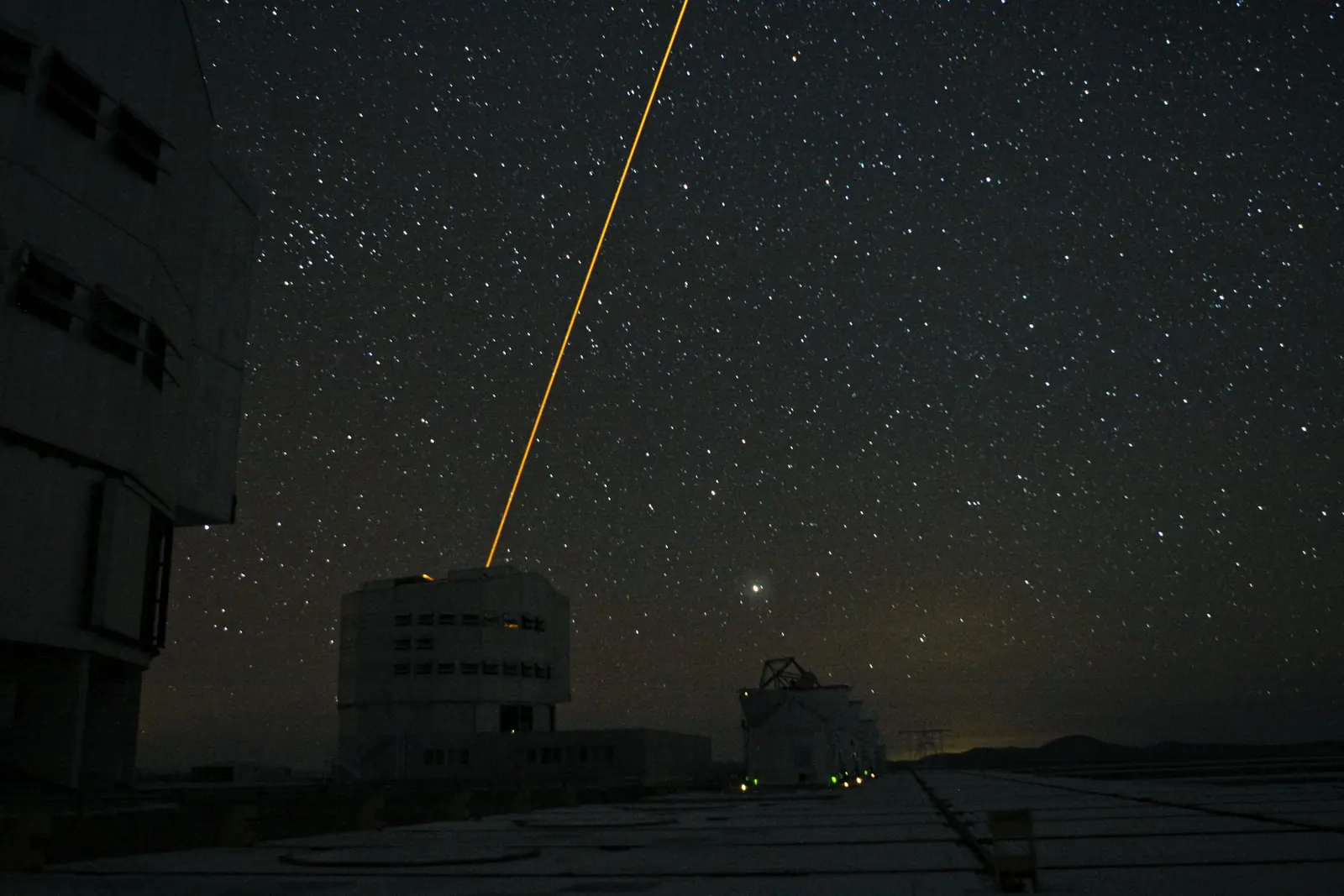
Direct-to-Earth free-space optical communications, optical ground stations, network routing, and satellite communications
A free-space optical link is only as reliable as the atmospheric information used to operate it. Miratlas supports:
- Selecting suitable sites for optical ground stations
- Routing traffic dynamically in response to current conditions
- Using site diversity to improve link availability
Operational benefitMore resilient links, higher availability, and fewer weather-related outages
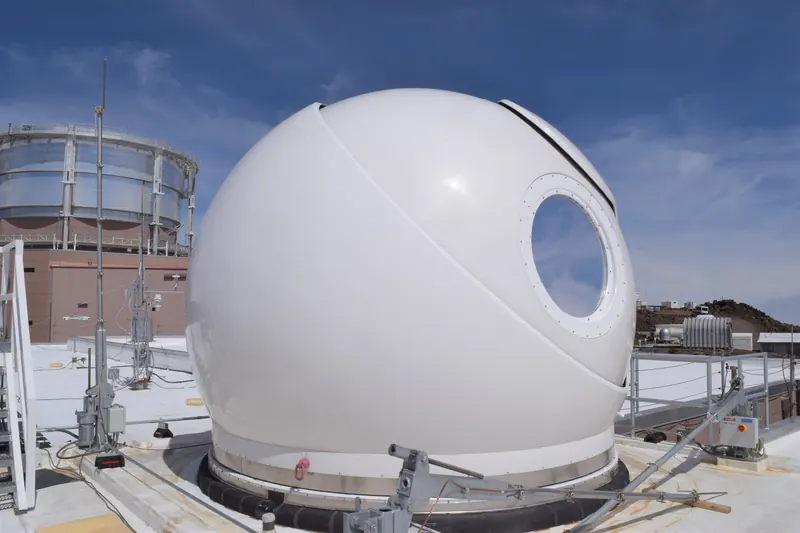
The predictive analytics platform converts these measurements into routing and availability information. It helps teams compare ground-station sites, simulate link availability, optimize transmission windows, anticipate degradation, and route across multiple sites. These capabilities support more proactive network operations and better-informed infrastructure decisions.
Open PathfinderSite diversity across a whole network: on a 3D globe, Sky Monitor ground stations, a LEO constellation and the laser links between them, replayed minute by minute over a real day of measured clouds and turbulence.
Open the FSOC DemoOne site, sector by sector: the sky over a ground station cut into 32 sectors, each classified for an optical link from the stars seen by night, with cloud cover by day.
Open SkyVIS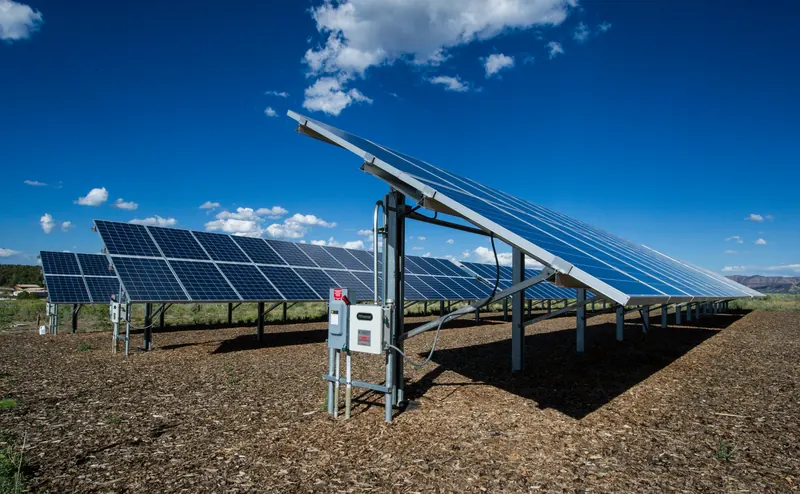
Atmospheric modelling, climate research, astronomy, and aviation
Sky Monitor is a passive optical sensing system that provides continuous, high-resolution atmospheric measurements for:
- Detecting contrails for climate-impact studies and air-traffic optimization
- Building long-term datasets for climate and environmental models
- Supporting weather prediction, pollution monitoring, and atmospheric physics
- Characterizing sites for ground-based telescopes and optical space situational awareness
Research accessThe Lamarck program provides access for academic research and public-interest projects.
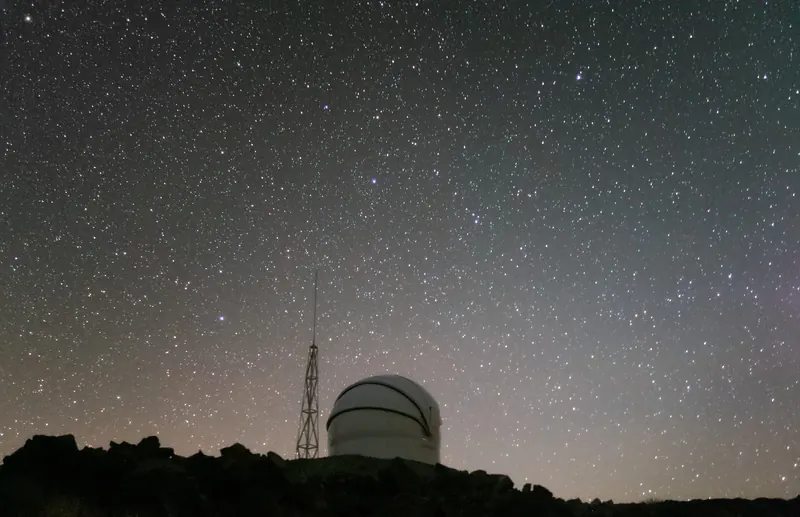
Sky Monitor measurement overview
Sky Monitor combines a main unit, C-DIMM, and weather station. Optional equipment includes LWIR, an altitude-azimuth tracking mount, and SHABAR for daytime turbulence. Operating range: -30°C to +50°C, up to 93% relative humidity, and wind speeds up to 80 km/h.
Download the full technical datasheet